Is Libby actually free? Who pays for your library's ebooks
Libby costs you nothing. Your library pays $60 per ebook license and $95 per audiobook. Here is who really pays, and why your hold is six months long.
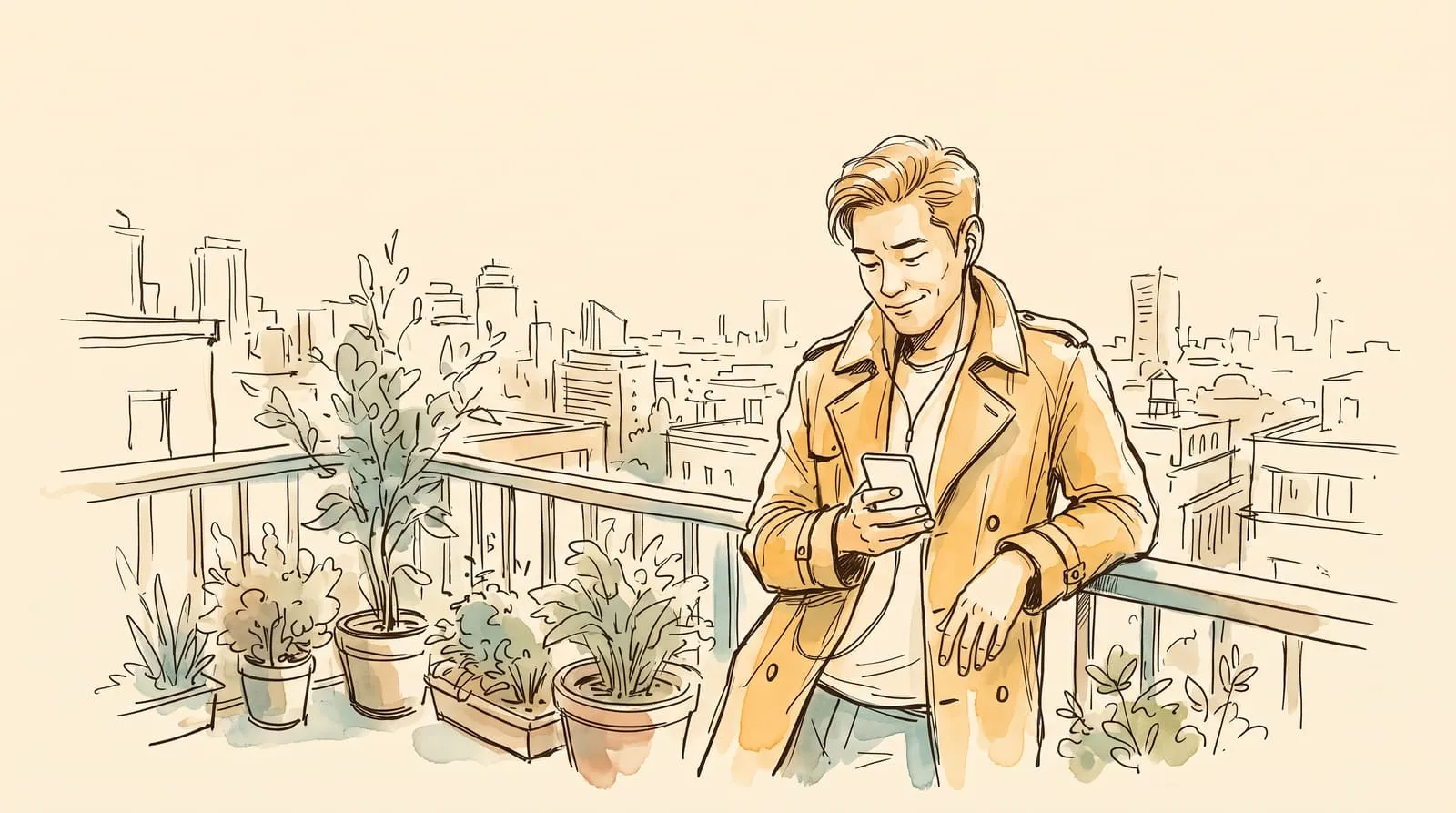
Libby is free. The audiobook you borrowed on it last week was not. Somewhere in your library’s acquisitions budget there is a line item for that specific title, and depending on the publisher it cost the library somewhere between three and five times what you would have paid for it on Audible. Then, in two years or 26 checkouts, whichever comes first, it will vanish and the library will have to buy it again.
Almost every article about Libby stops at “it’s free” and moves on. That leaves the most interesting question unanswered, and it happens to be the same question that explains the thing everyone actually complains about: the hold queue.
Is Libby free?
Yes. Libby costs nothing to download and nothing to use. There is no subscription tier, no in-app purchase, no premium upgrade, and no late fee, because an overdue loan simply returns itself. Every ebook, audiobook, and magazine you borrow through it has already been paid for by your public library, using money that comes from local property taxes, state funding, and often a Friends of the Library group running a book sale in a church basement. All you need is a card from a participating library, which is free to residents nearly everywhere. If no local library serves you, many systems issue digital-only cards to non-residents, some free and some for an annual fee.
What is not free is the book. Libraries do not buy digital titles the way you do. They license them, typically at three to five times the consumer price, under terms that cause the license to expire.1 That expiry is the single fact that explains the hold queue, the missing titles, and the six-month wait on the audiobook everyone wants.
How is Libby free if the books are not?
When you buy an ebook, you are buying something close to a permanent personal copy. When a library acquires the same ebook, it is buying a contract, and the Big Five publishers write those contracts in three basic shapes.
One copy, one user, metered by time. The library licenses a single digital copy that one person can borrow at a time, and the license dies on a calendar. Penguin Random House moved its US library ebooks to a two-year model in October 2018, capping adult frontlist titles at $55 a copy, down from the $65 it had charged for the perpetual licenses it used to sell.2 Two years later the copy is gone whether it circulated 200 times or twice.
Metered by checkout. Same idea, different counter. HarperCollins set the template in 2011 with a 26-loan cap, which sounded arbitrary then and is still the standard on its titles now. On a two-week loan period, 26 checkouts is roughly one year of continuous circulation. Then the file stops working and the library re-buys it.
Cost per circulation. The library owns no copy at all. It pays a fee every time somebody borrows. Hoopla runs on this model, and a few Wisconsin libraries have published their actual numbers. Greenfield put its average at $2.40 a checkout, then dropped the service entirely in January 2025 rather than absorb a quoted 452% increase. Shorewood, up the road, put its own at $2.38 and cut patrons from four borrows a month to two.3 Illinois libraries reached the same conclusion: Urbana is ending Hoopla after December 2025, citing a cost more than three times its other digital services.
This is why most of Hoopla carries no wait and your library quietly caps how much you can take. Those caps commonly land between two and ten items a month.
There is a fourth model, simultaneous use, where any number of patrons can read a title at once and nobody waits. Libraries love it and publishers charge considerably more for it, which is why you rarely see it.1
None of this is perfectly uniform. Macmillan runs a hybrid, and Penguin Random House still sells its audiobooks on perpetual licenses that never expire, even as its ebooks run on the two-year clock. The direction of travel across the Big Five is toward expiry, but there are exceptions.
What one book actually costs your library
The Wisconsin Public Library Consortium publishes its own numbers, which is more transparency than most of the industry offers. For a typical popular novel, the consumer ebook runs $14.99 and the library’s two-year license runs $60 on average. The consumer audiobook runs $25 and the library’s 26-checkout license runs $95.1
Read those two pairs again, because the audiobook gap is the one that matters. Your library pays close to four times retail for a file that self-destructs after 26 loans. A hardcover bought for the same shelf costs less, lasts a decade, and can be sold at the book sale afterward.
It is also getting worse. ReadersFirst, which has tracked library licensing prices since 2022, found HarperCollins ebook licenses rising at an annualized 17.3%, and Hachette audiobook licenses up 36% in a single year, while retail Kindle prices stayed essentially flat and Audible prices fell.4 The gap between what you pay and what your library pays has widened every year ReadersFirst has measured it.
Why your audiobook hold is six months long
A library’s digital budget is fixed, and audiobooks carry the priciest licenses in it. So when a new release lands and 300 people put it on hold, the library cannot simply buy 30 copies, because 30 copies of one audiobook at $95 each is $2,850 of a budget that also has to cover every other title published that month. A metered license only covers 26 checkouts. After that, the library pays for the same title again.
Most systems buy against a published holds ratio. The Washington Anytime Library adds one copy for every seven people waiting; Toronto Public Library aims for one in six.5 That keeps the queue finite, and long. Wisconsin’s consortium reported an average wait of more than 80 days across its whole collection.1 On a single hot audiobook, six months is normal, and it is not your library being cheap. It is a $95 license meeting a queue of 300 people.
The corollary is worth knowing: backlist is nearly always available immediately. Books more than a couple of years old have fallen out of the demand curve, and nobody is competing for them. If you want Libby to feel abundant, read old books. Our full Libby review covers the rest of the mechanics, including the 72-hour window that quietly kills more holds than the queue does.
Where else you can legally read for free
Libby is the biggest free source but not the only one, and the others fail in different ways, which makes them useful as a set.
Project Gutenberg holds 79,385 free ebooks, no account, no waiting, no license expiring behind the scenes.6 Nearly all of it is old enough that US copyright has lapsed, so you get Middlemarch and Moby-Dick and very little published this decade. No holds exist here because there is nothing to meter.
LibriVox is the audio equivalent, 21,756 public domain audiobooks recorded by volunteers.7 The narration quality varies from genuinely excellent to clearly recorded next to a refrigerator. It costs nothing and there is no queue.
Open Library, run by the Internet Archive, lends scanned copies of in-copyright books one borrower at a time, which is a real library model applied to a digital scan. You can hold ten at once, on fourteen-day loans. It is also the most legally precarious option here. Four publishers sued the Archive in 2020, the Second Circuit affirmed the ruling against it in September 2024, and the Archive let the deadline to appeal further pass that December, so the matter is settled. The Archive says the outcome forced it to pull more than 500,000 books from lending, and they remain unavailable.8 What is left is still worth searching, particularly for out-of-print nonfiction.
Hoopla, if your library offers it, has no wait on most of its catalog, because your library pays a fee on each borrow. A smaller “Flex” tier does run waitlists. Here the scarce resource is your monthly allowance.
Google Books gives you full text on public domain titles. On everything else you get whatever the rightsholder agreed to, which ranges from a generous sample down to a couple of lines around your search term. Worth checking before you commit to a four-month hold, as long as you expect the snippet.
None of this covers paper. The free tier there is a box on somebody’s lawn, and little free libraries have no licenses to expire and no queue to join.
If you are reading on a dedicated device rather than a phone, the choice of hardware changes how painless any of this is. Kobo readers have OverDrive borrowing built directly into the device, while Kindle routes library loans through a wireless handoff that only works on US library accounts. Our Kobo versus Kindle comparison walks through what that difference costs you in daily friction. For listening specifically, our roundup of audiobook apps puts Libby next to the paid services on catalog and availability.
Should you feel bad about borrowing?
The licensing story gets misread here, so it is worth being careful.
Authors are paid on library licenses at the same royalty rate as a retail sale, applied to a much larger list price. On a standard 25% of net, a $14.99 consumer ebook earns the author about $2.62. The $55 library license on the same title earns $6.87 under a wholesale contract and $9.60 under an agency one, and it earns that again every time the license expires and the library re-buys it.9 Per transaction, the library is the better payday.
Whether all that borrowing displaces sales the author would otherwise have made remains an open fight. On September 1 of this year the Association of American Publishers and the Authors Guild released a study, run by economists at Secretariat Advisors, reporting “robust and economically meaningful evidence of direct substitution between library e-lending and retail sales.”10 Librarians have contested it hard, pointing out that the two organizations commissioning research into whether libraries cost publishers money both have an obvious stake in the answer.11 Take the finding seriously and note who paid for it.
What is not in dispute is the per-transaction math. Use the library. Then buy the books you loved, from authors you want to keep publishing. That sequence beats feeling vaguely guilty and buying neither.
Where Moth fits in
Libby gets you the book and then leaves. That is fine, since lending and habit-building are different jobs, but it does mean the thing most likely to defeat you is a two-week loan sitting untouched until it returns itself.
Moth tracks the reading rather than the borrowing. Start the timer when you open the loan, stop it when you put the phone down, and it works out your pace automatically. The free tier covers unlimited reading sessions, daily goals, streaks, and up to 12 books, which is more than most people have on loan at once. Premium, at 4.99 USD per month or 24.99 USD per year, removes the book limit and adds reading statistics and yearly goal tracking.
The practical use here is boring and effective. A ten-minute daily goal, started the evening a hold arrives, is usually the difference between finishing the book you waited four months for and watching it expire on day 14.
Open Libby, search for something published before 2015, and check whether it is available right now. Most of the time it will be, and no one will be waiting behind you.
Frequently asked questions
Does Libby cost money?
No. Libby has no purchase price, no subscription, no in-app purchases, and no late fees. A loan expires on its own, so there is nothing to pay and nothing to return. The cost sits entirely on the library side, where digital licenses run roughly three to five times consumer price and expire after a set period or number of checkouts. You need a library card from a library that has an OverDrive contract. That card is free to residents in most places, and a number of systems sell digital-only cards to non-residents for an annual fee if your local library is not a partner.
How much does the Libby app cost?
Nothing, on every platform. Libby is free on iOS, Android, and in a browser at libbyapp.com. There is no paid tier and no ad-supported version. OverDrive, which makes Libby, earns its money by selling digital lending contracts to libraries. Readers are never charged.
Is Libby legit?
Yes. Libby is the official app from OverDrive, the company that supplies digital lending to the large majority of North American public libraries. Everything you borrow is properly licensed by your library, so it is fully legal, and the app is distributed through the Apple App Store and Google Play.
Is Libby worth it?
If you read a mix of backlist and new releases and can tolerate a wait on the second kind, yes. It costs nothing to find out, which is a rare property in this category. If you exclusively read new releases the week they publish, a paid subscription answers a question Libby structurally cannot.
Why does my library have so few copies?
Because copies expire. A two-year or 26-checkout license means the library is renting shelf space it never gets to keep, and every renewal competes with every new title published that month.
Footnotes
-
Wisconsin Public Library Consortium. More Than Words: The Price and Politics of Ebooks and Audiobooks. Updated March 18, 2026. https://wplc.info/for-patrons/ebookcost/ ↩ ↩2 ↩3 ↩4
-
Publishers Weekly (2018). Penguin Random House Changes Its Library E-book Terms. September 4, 2018. https://www.publishersweekly.com/pw/by-topic/industry-news/libraries/article/77904-penguin-random-house-changes-its-library-e-book-terms.html ↩
-
Greenfield Public Library, Wisconsin. Hoopla Ending. https://www.greenfieldlibrary.org/blog/post/hoopla-ending. Shorewood Public Library, Wisconsin. Changes coming to Hoopla in 2025. https://www.shorewoodlibrary.org/blog/staff/changes-to-hoopla-in-2025. Urbana Free Library, Illinois. Hoopla Service Update. https://urbanafreelibrary.org/library-news/blog/public-hoopla-service-update ↩
-
ReadersFirst. Publisher Price Watch. Price data collected May 2025. https://www.readersfirst.org/publisher-price-watch ↩
-
Bellingham Public Library, Washington. Local libraries advocate for readers’ rights after publishers decide to limit ebook access. https://bellinghampubliclibrary.org/news/local-libraries-advocate-for-readers-rights-after-publishers-decide-to-limit-ebook-access. Toronto Public Library’s six-to-one target was given by Matt Abbott, its senior manager of collection development, to BlogTO, October 2025. https://www.blogto.com/city/2025/10/6-year-wait-list-rent-book-toronto/ ↩
-
Project Gutenberg. Catalog count as of September 14, 2026. https://www.gutenberg.org/ ↩
-
LibriVox. Cataloged works count as of September 14, 2026. https://librivox.org/ ↩
-
Internet Archive. Why are so many books listed as “Borrow Unavailable” at the Internet Archive? The 500,000 figure is the Archive’s own. Note that this page has not been updated since the appeal concluded and still describes the case as pending. https://help.archive.org/help/why-are-so-many-books-listed-as-borrow-unavailable-at-the-internet-archive/ ↩
-
Friedman, Jane (2025). What Do Authors Earn from Digital Lending at Libraries? February 19, 2025. https://janefriedman.com/what-do-authors-earn-from-digital-lending-at-libraries/ ↩
-
Dutra, Jessica and Stoner, Robert, Secretariat Advisors (2026). An Empirical Study of the Impact of Library E-Lending on the Book Economy. Commissioned by the Association of American Publishers and the Authors Guild, September 1, 2026. https://publishers.org/news/new-study-analyzes-the-impact-of-library-e-lending-on-commercial-book-markets/ ↩
-
Words & Money (2026). Publishing Industry Study Says Digital Library Lending Is Cannibalizing Retail Sales, Librarians Say It Reveals Something Else. https://www.wordsandmoney.com/publishing-industry-study-suggests-digital-library-lending-is-cannibalizing-retail-sales-librarians-say-it-reveals-something-else/ ↩