What is a book hangover, and how do you actually get over one?
A book hangover is the specific grief of finishing a great book. Here's what causes it and eight things that actually help you move on.
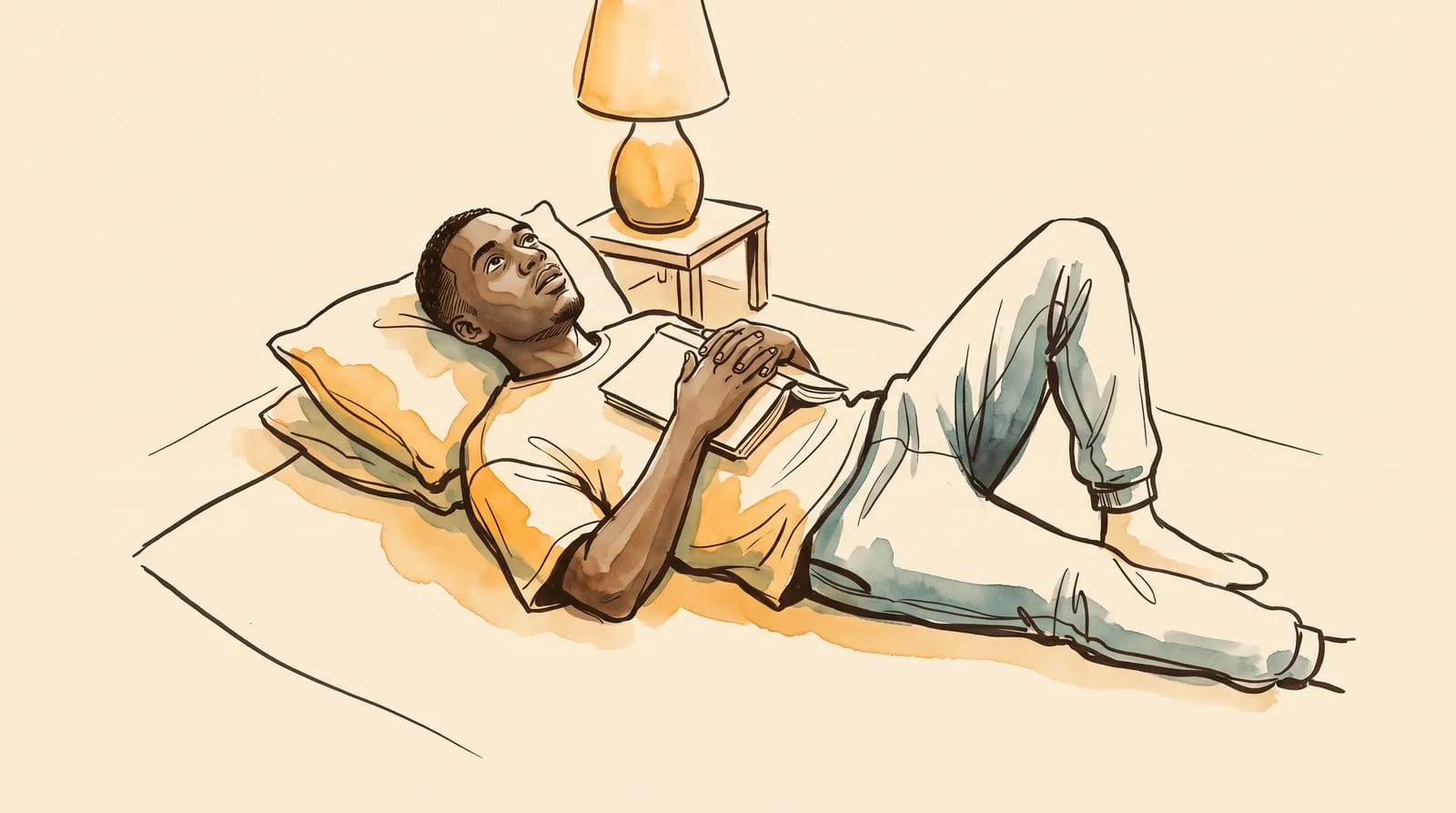
I finished a novel at 1:40 in the morning last month, closed it, and lay there staring at the ceiling for twenty minutes because I did not know what else to do with myself. I wasn’t tired, and it wasn’t quite sadness either, just unmoored, like I had been living somewhere for three hundred pages and the lease had ended without warning. That is a book hangover. Most readers run into it eventually.
What is a book hangover?
A book hangover is the disoriented, low-grade grief that follows finishing a book you were fully absorbed in. It shows up as restlessness, a reluctance to start anything new, and a strange loyalty to characters who do not exist. Plenty of book hangovers follow happy endings. What you’re actually grieving is the sudden absence of a world you had gotten used to living inside part-time.
The term borrows its shape from the literal hangover: a comedown after something that felt good while it lasted. You feel off, in a way that traces back to one clear cause.
Why finishing a great book feels like a loss
A long, immersive book asks you to hold a cast of people, a setting, and an unresolved question in your head for days or weeks. You think about them in the shower. You compare real conversations to ones in the book. That is a real relationship, built the same way any habit is: through repetition, in the same chair, at roughly the same hour each evening.
When the book ends, the story resolves but the habit does not just stop cleanly. You still have the evening slot, the appetite for the world, the attachment to the characters, and none of it has anywhere to go. Psychologists who study fiction sometimes call this transportation: the experience of becoming absorbed enough in a narrative that it temporarily reshapes your attention and emotional state.1 A book hangover is what happens when transportation ends abruptly and your attention has nowhere obvious to land.
This is different from a reading slump, where the problem is that you cannot get into anything. A book hangover is almost the opposite problem: you got in too deep, and everything else feels smaller by comparison. If you are dealing with the getting-in problem, we’ve written about that separately. This is about the aftermath of a book that worked too well.
Eight things that actually help
1. Let yourself sit with it for a day
Do not reach for the next book immediately. The instinct to fill the gap right away usually backfires, because whatever you pick up next gets compared unfavorably to the book you just finished, which is still fresh and undefeated in your memory. Give it a day. Let the feeling run its course instead of rushing to fix it.
2. Write down what worked
Before the details fade, note what specifically got you: a character, a twist, the pacing, the ending. It gives the experience somewhere to land besides just missing it, and it becomes a reference for what to look for in your next read, instead of trying to vaguely recreate the feeling with a random pick.
3. Talk about it with someone who has read it
A book hangover is partly loneliness: you finished something significant and the people around you have not. Find a friend who has read it, a subreddit, a Goodreads review thread, anything. Saying out loud what happened to the characters is often enough to quiet the part of your brain still replaying it.
4. Reread a favorite scene, not the whole book
Rereading the entire novel immediately is tempting and usually a mistake, since it just delays the comedown rather than resolving it. Instead, flip back to one scene you loved. It scratches the itch of revisiting the world without committing you to another few hundred pages of the same story.
5. Watch or listen to something adjacent
If the book had a strong sense of place or atmosphere, a film with a similar mood, a soundtrack, or even a video essay about the setting can bridge the gap. It gives your attention somewhere gentler to go before it fully lets go, without trying to replace the book itself.
6. Pick your next book deliberately, not randomly
Grabbing whatever is next in the pile rarely works right after a big read, because the contrast is unkind to almost anything. Choose something in a different genre or a different pace on purpose. A slower literary novel after a thriller, or a short story collection after a nine-hundred-page fantasy epic, lowers the chance of an unfair comparison.
7. Give yourself permission to not love the next one
Sometimes the next book you start does not land, and that is fine. It does not mean your reading life is broken. It means you are still partly living in the last book, which is normal and temporary. If the next pick genuinely is not working after a fair shot, that is a separate decision, and we’ve made the case elsewhere for just putting it down rather than forcing it.
8. Mark the ending somehow
Some readers rate the book immediately. Some post a photo of the cover. Some just sit with a cup of tea and think about it for ten minutes before doing anything else. The specific ritual matters less than having one. Marking the ending, even in a small, private way, settles the sense that something real just happened, even if it happened on paper.
How long does a book hangover usually last?
Most resolve within a day or two once you have talked about the book, given it a proper send-off, and let a little time pass before starting the next one. A book hangover that stretches past a week is usually a sign the book mattered more than you initially realized, and that is worth sitting with rather than rushing past.
The Moth angle
Part of what makes a book hangover feel disorienting is that the book simply vanishes into your “finished” shelf and the record of the experience goes with it. Moth logs the sessions you spent inside a book alongside the final tally, so the twelve nights you spent reading until 1 a.m. are still there after you close it. When you rate a finished book, Moth generates a completion card with the cover and your stats, built for sharing to Instagram Stories, which turns out to be a reasonable stand-in for tip four above: a small, specific ritual that marks the ending instead of letting it dissolve into the next thing.
Tonight
If you just finished something that hit hard, do not open the next book yet. Text someone who has read it. Tell them the one scene that got you. Often that’s enough to loosen the hold the last book still has on you.
Footnotes
-
Green, M. C., & Brock, T. C. (2000). The role of transportation in the persuasiveness of public narratives. Journal of Personality and Social Psychology, 79(5), 701-721. https://doi.org/10.1037/0022-3514.79.5.701 ↩