What to look for in a reading light (and why color temperature matters more than brightness)
Most reading lamps are bought for brightness. The number that actually matters is Kelvin, and getting it wrong quietly costs you sleep.
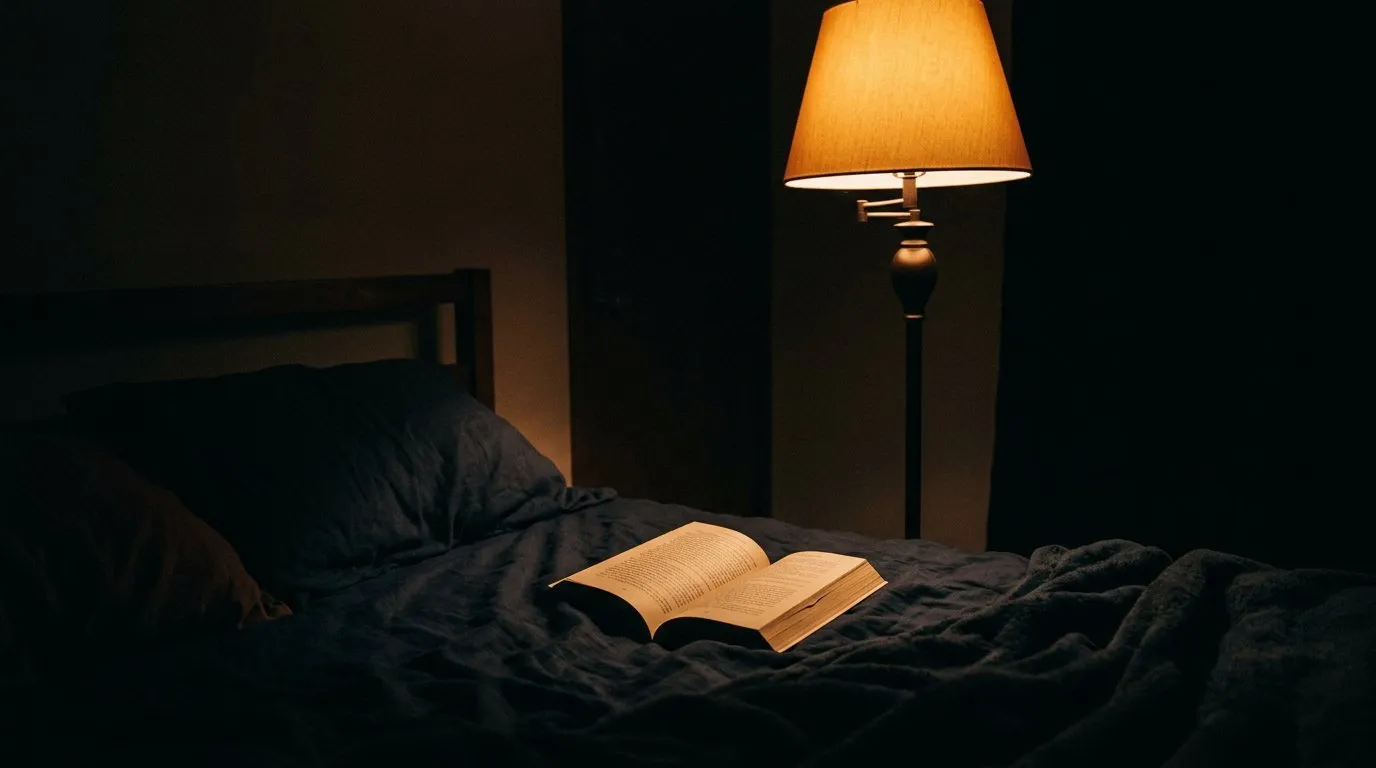
The number on a reading light that matters is not lumens. It is Kelvin. The best reading light is not the brightest one; it is the one with the right color for the time of day you actually read. Most product pages bury the Kelvin figure in small print below the wattage equivalent and the energy rating. Most buyers never look for it. That single oversight is probably responsible for more disrupted sleep among regular readers than any amount of late-night phone-scrolling.
What lumens measure, and what they miss
Lumens measure brightness, which is a real concern. A lamp too dim for reading causes eye strain because your eyes are constantly working to compensate for low contrast between text and page. Somewhere around 450 to 800 lumens, aimed at the book from a reasonable distance, is enough for comfortable reading. A standard 60-watt equivalent LED puts out roughly 800 lumens. Most reading lamps clear this bar without effort.
Color is the variable lumens leave out. That is where the real decision lives, especially if you read at night.
What color temperature should a reading light be?
Color temperature is measured in Kelvin. Lower numbers mean warmer, more amber light. Higher numbers mean cooler, bluer light. Here are the four points that matter for a reading setup:
2700K. The warmest common indoor light, equivalent to a traditional incandescent bulb. The amber glow most people associate with a bedside lamp. Low in the blue-wavelength output that interferes with melatonin production. This is the right choice for anyone who reads in the hour or two before sleep.
3000K. Marginally less amber, sometimes labeled soft white. Still warm. An acceptable bedside option, though 2700K is the better call if you read late.
4000K. Neutral white. A lot of modern LED fixtures default to this because it mimics midday daylight and looks crisp. Good for a home office. For evening reading, it is a problem.
5000K and above. Cool white or daylight spectrum. Fine for a desk at nine in the morning. A poor choice for anything within two hours of sleep.
The visual difference between 2700K and 4000K is subtle in a showroom; both look like white light. The biological difference is not subtle. A 2015 study in the Proceedings of the National Academy of Sciences found that readers using blue-light-emitting devices in the evening took longer to fall asleep, had measurably reduced melatonin levels, and reported lower alertness the following morning.1 The mechanism applies to a 4000K floor lamp just as it does to a phone screen. Blue-weighted light tells your circadian system it is daytime. The lamp sitting three feet from your armchair can be working against you without your noticing.
Why daytime reading is a different problem
If you read in the morning or at lunch, color temperature becomes a secondary concern. Your circadian rhythm is already calibrated to wakefulness, and natural daylight is usually present to reinforce it. Under a 4000K desk lamp during the day, you may actually read slightly better: neutral light improves contrast and tends to keep alertness a little higher for dense material.
Evening is where the logic inverts. The transition toward sleep depends partly on a gradual reduction in blue-light exposure, which signals the brain to begin melatonin release. A 2700K lamp supports that transition. A 4000K lamp delays it in ways that are not always obvious in real time. You will not feel “wired” the way you might after an espresso. You may just find, forty minutes after putting the book down, that sleep is slower to arrive than it should be.
We’ve written about why bedtime is the most reliable slot for building a reading habit; the light environment around that habit is worth getting right, because the wrong one quietly undermines the thing the habit is supposed to coexist with.
What to actually check before you buy
For a bedside or evening reading lamp:
Target 2700K. Accept 3000K. Avoid anything above that for reading you plan to do in the last two hours before sleep.
Brightness: 450 to 800 lumens is adequate. Higher is not better in a small reading space; it just creates more ambient glare.
Dimmability is worth paying for. A lamp that dims smoothly to 30 or 40 percent lets you reduce both brightness and, on warm-spectrum bulbs, effective blue output as the evening progresses. One good dimmable 2700K bulb handles the whole problem.
Direction matters more than most people account for. Light should fall on the page, not directly toward your eyes. An adjustable floor lamp with the head angled down, or a clip-on positioned above the book, is more comfortable for long sessions than a bedside lamp at eye level.
For a daytime reading setup:
3500K to 4000K is fine and slightly better for sustained focus on challenging material. If you can position near a window without glare, natural light is still the best option. A consistent reading chair, even in a corner of a room you already use, builds a contextual cue that makes picking up a book easier over time. The research on how long a habit takes to form is more forgiving than most people expect; the environment you read in is one of the inputs that accelerates it.
What to ignore:
Wattage is irrelevant for LED bulbs. It was a useful proxy for incandescent output; it stopped being meaningful when LEDs became the default.
“Warm white” and “soft white” are marketing labels with no standardized definition. One manufacturer’s soft white is 2700K; another’s is 3200K. Find the Kelvin number. It is on the box, usually near the energy rating, and increasingly printed on the bulb itself.
“Reading lamp” as a product category signals nothing about light quality. There are expensive dedicated reading lamps sold at 5000K and inexpensive clip-ons sold at 2700K. The category name is not a shortcut for the spec.
Floor lamps, desk lamps, and clip-ons: which form factor for which use
The form of the lamp matters for reasons beyond aesthetics. Each type handles light direction differently, and direction affects eye strain more directly than Kelvin or lumens do.
Floor lamps are the most common choice for a reading chair or bedside setup. The key variable is head position. A lamp with an adjustable neck angled down toward the book is significantly more comfortable for long sessions than one that puts the bulb at eye level or bounces light upward. Torchieres, the upward-bowl style, are the worst option for evening reading: they fill the whole room with diffuse light, which keeps your circadian system alert regardless of the bulb’s Kelvin rating. An arc floor lamp, positioned behind and slightly to one side of the chair, with the head angled down, is a reliable setup.
Desk lamps and table lamps offer better directional control. If your reading spot has a surface at roughly desk height nearby, a gooseneck lamp aimed at the book gives the most flexible positioning. The limitation is reach: a desk lamp set to avoid glare may not cover the full page depending on how you hold the book or shift position in a session.
Clip-on lamps are the most practical option for in-bed reading and for not disturbing a partner. Positioned above and behind the book, angled at roughly 45 degrees, a clip-on puts almost all light on the page and keeps it out of your visual field. The tradeoff: most clip-ons run at lower wattages, which limits maximum brightness. For 2700K at 450 to 500 lumens, the options are adequate. Going significantly higher is harder in clip-on form.
For any of these, the right lamp only helps if you actually use the setup consistently. The research on habit formation points strongly to place as a trigger; a fixed chair with a fixed, correctly configured lamp builds a context cue that makes picking up a book feel automatic rather than effortful.
Smart bulbs and the easy version of this
If you use a smart bulb system, you already have everything you need. Most allow you to set both brightness and color temperature from an app, or to schedule changes automatically. A simple routine: 4000K during the day, drop to 2700K and reduce brightness to 50 percent at 8 or 9 pm. Once the schedule runs, you stop thinking about it.
This is not a recommendation for smart bulbs specifically. A dimmable 2700K bulb in a standard lamp socket solves the same problem for a few dollars and installs in thirty seconds. The point is that adjusting color temperature is not complicated once you know it matters.
A word on Moth’s design choices
Moth runs dark-mode-first, warm amber backgrounds, low-contrast interface, for the same reason 2700K matters at bedtime. Most reading sessions happen at night, and the app that logs them should not be another source of blue light. When you finish a session and record your pages, the screen you pick up is designed to sit alongside a warm lamp rather than fight it.
The default session goal is ten minutes. It is deliberately low, because a ten-minute session you actually complete is worth considerably more to a forming habit than a thirty-minute target you skip. The light you read by is one small variable in that system. Small variables that work against sleep tend to compound quietly.
The short version
Buy 2700K for any lamp you read by in the evening. Check the Kelvin number before you buy anything. Ignore wattage. Ignore lumens above 800. If your current lamp is 4000K or higher, a replacement bulb costs under ten dollars.
Put the new bulb in tonight.
Footnotes
-
Chang, A. M., Aeschbach, D., Duffy, J. F., & Czeisler, C. A. (2015). Evening use of light-emitting eReaders negatively affects sleep, circadian timing, and next-morning alertness. Proceedings of the National Academy of Sciences, 112(4), 1232-1237. https://doi.org/10.1073/pnas.1418490112 ↩