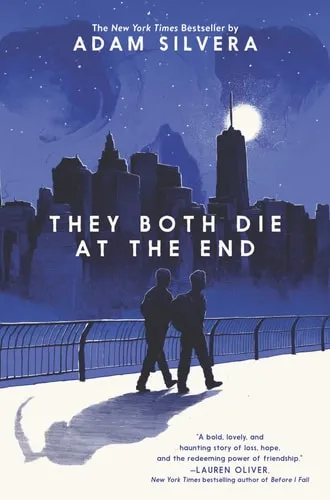
They Both Die at the End
by Adam Silvera
more Young Adult & Dystopian →The premise (an app that calls to tell you you'll die today) does the heavy lifting, but the book's real strength is how ordinary and specific Mateo and Rufus's single day together is. It's a book readers go into knowing the ending and still get wrecked by.
why track this in moth
This is a book people reread on purpose to catch the foreshadowing they missed the first time; Moth's notes are a good place to track what you notice on a reread.
Book facts
- Genre
- Young Adult Fiction, Social Themes, Death, Grief, Bereavement, Friendship, LGBTQ
- Publisher
- HarperCollins
- Published
- September 5, 2017
- Pages
- 384
- Reading time
- 7 hr 38 min · ~18 nights at 25 min/day in Moth
- ISBN
- 9780062457790
- Language
- en
Publisher's summary
Adam Silvera reminds us that there’s no life without death and no love without loss in this devastating yet uplifting story about two people whose lives change over the course of one unforgettable day.
New York Times bestseller * 4 starred reviews * A School Library Journal Best Book of the Year * A Kirkus Best Book of the Year * A Booklist Editors' Choice of 2017 * A Bustle Best YA Novel of 2017 * A Paste Magazine Best YA Book of 2017 * A Book Riot Best Queer Book of 2017 * A Buzzfeed Best YA Book of the Year * A BookPage Best YA Book of the Year
On September 5, a little after midnight, Death-Cast calls Mateo Torrez and Rufus Emeterio to give them some bad news: They’re going to die today.
Mateo and Rufus are total strangers, but, for different reasons, they’re both looking to make a new friend on their End Day. The good news: There’s an app for that. It’s called the Last Friend, and through it, Rufus and Mateo are about to meet up for one last great adventure, to live a lifetime in a single day.
In the tradition of Before I Fall and If I Stay, They Both Die at the End is a tour de force from acclaimed author Adam Silvera, whose debut, More Happy Than Not, the New York Times called “profound.”
Related books
From the blog
Why reading before bed is the easiest reading habit to build
Most reading advice asks you to carve out a slot. Bedtime doesn't need carving. That's the whole point.
Read article →How to get out of a reading slump (when the usual advice isn't working)
Most reading slump advice is really a book recommendation list. The actual problem is different, and so is the fix.
Read article →